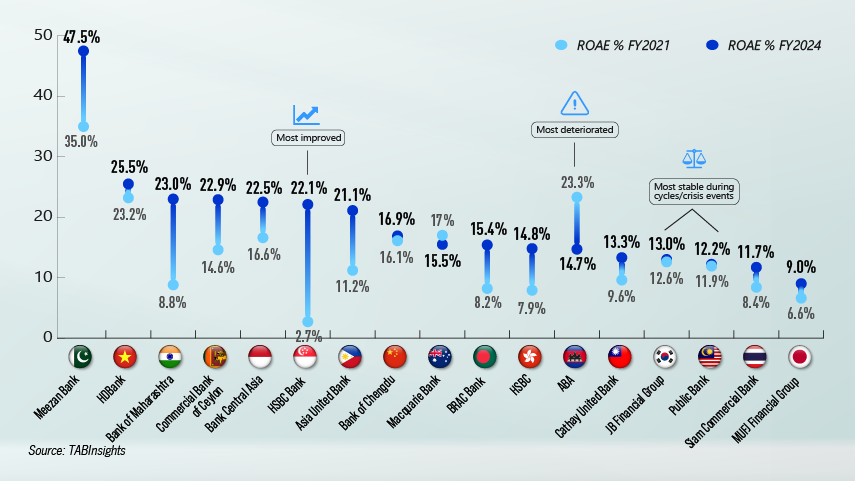

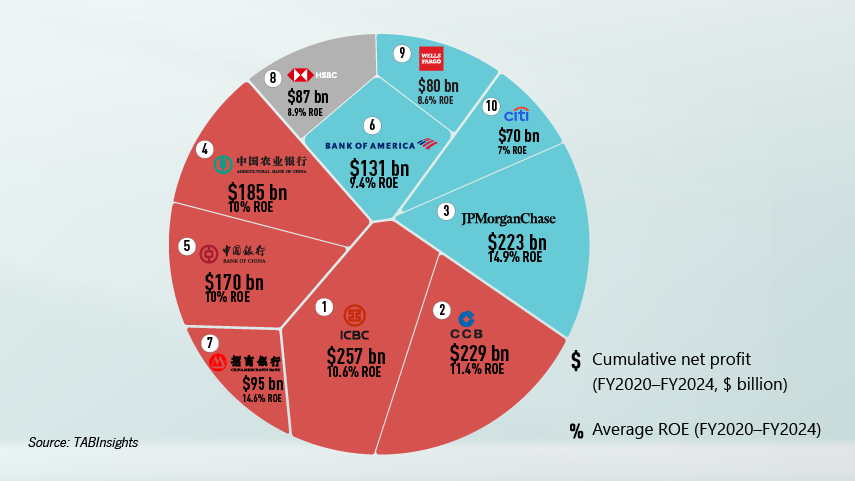
Chinese and US megabanks generate the largest absolute profits through scale and diversification, while emerging-market banks deliver higher — but more volatile — returns on equity.
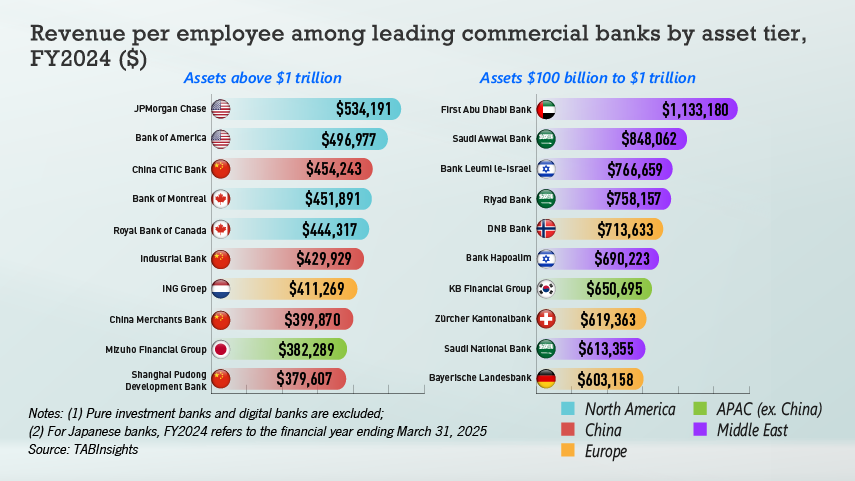
JPMorgan Chase and Bank of America lead large-bank revenue per employee rankings, while mid-tier banks such as First Abu Dhabi Bank and Saudi Awwal Bank report higher overall productivity levels, supported by focused business models, digital adoption and cost discipline.
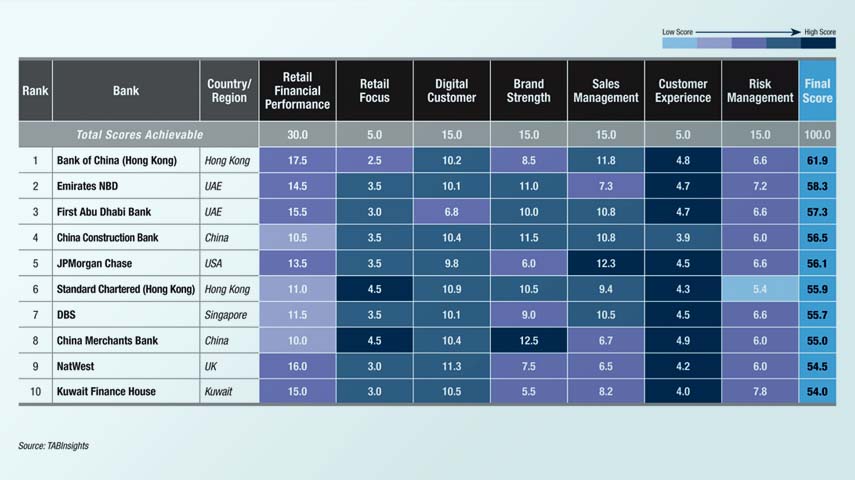
Bank of China (Hong Kong) leads the 2026 TAB Global World’s Best Retail Banks Ranking, ahead of Emirates NBD and First Abu Dhabi Bank, as banks globally shift toward targeted digital investment to convert deposit strength into fee income.
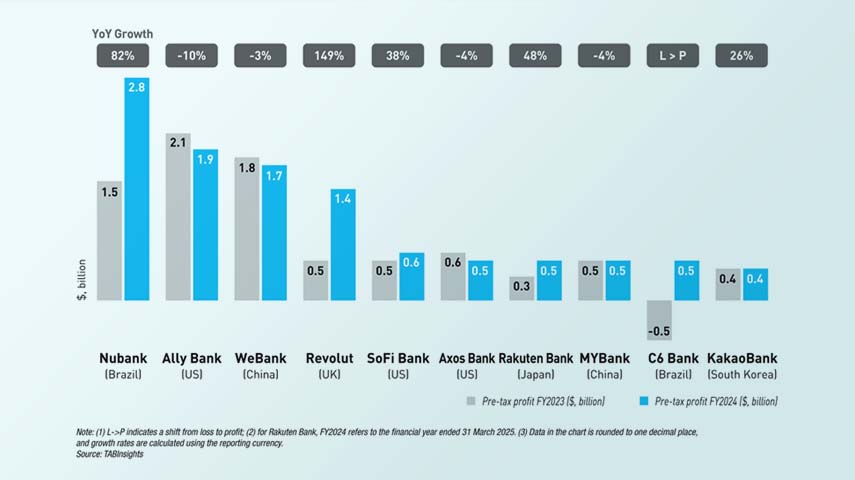
The top 10 digital banks by pre-tax profit leveraged scale advantages, yet growth varied widely, reflecting differences in strategies, market dynamics and operational priorities.
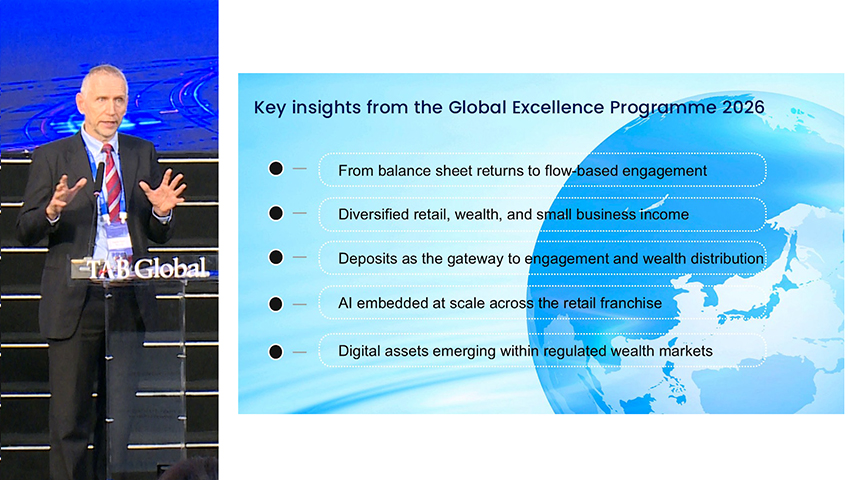
This year's TAB Global Excellence in Retail Financial Services Awards 2026 reveals three forces reshaping retail banking in ways that go beyond the interest rate cycle: the compression of spread-based income and the drive to diversify revenue; a fundamental reappraisal of the deposit franchise; and the deepening integration of artificial intelligence across banking operations and client engagement.
A correlation analysis across 100 global retail banks in FY25 finds a weak but statistically significant negative relationship between asset size and return on assets. Regional leaders demonstrate that specific business model choices, not balance sheet scale, drive superior profitability.
Asia Pacific remains the world's least profitable banking region, but a group of small emerging-market banks with assets below $50 billion are delivering outsized returns.
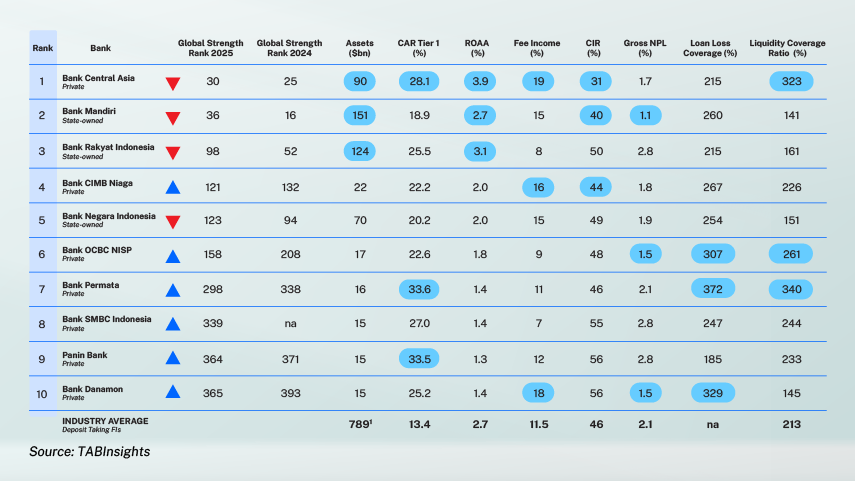
Indonesia's banking sector comprises 16 institutions in the TAB Global World’s 1000 Largest and Strongest Banks Ranking 2025, out of a total of 105 commercial banks in Indonesia. Bank Central Asia and Bank Mandiri stand out in Indonesia’s financial landscape, each excelling with distinct strategies and financial performance.
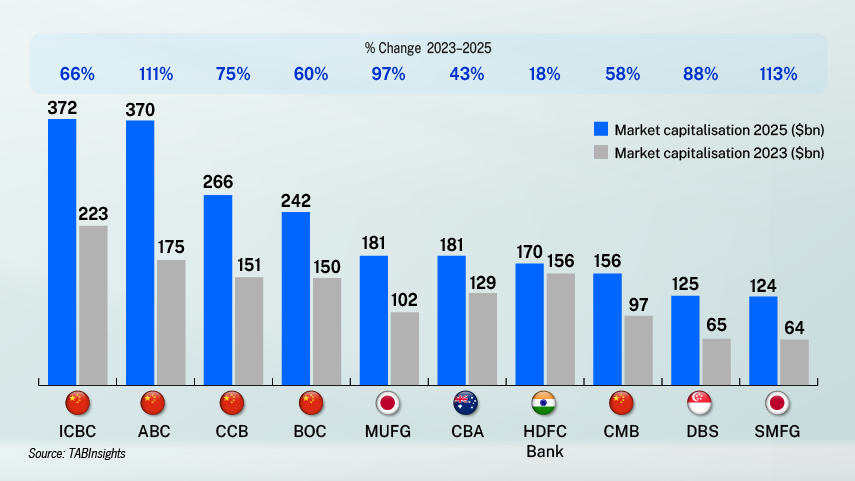
Japanese banks record the strongest gains in the market capitalisation ranking, Chinese megabanks retain scale leadership, while Indian and Indonesian lenders lose ground, and Singapore enters the top tier.
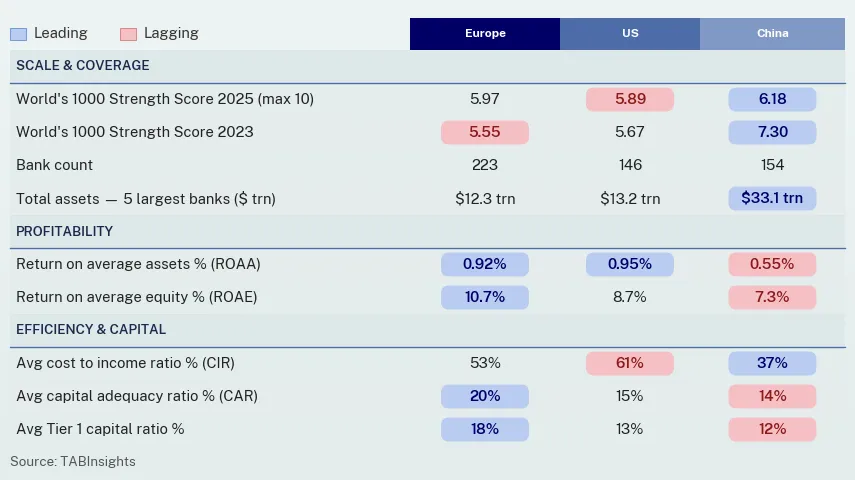
European banks have quietly closed the gap with their American rivals — and, on some measures of institutional strength, surpassed them, according to the World’s 1000 Strongest Bank Ranking. Yet Commerzbank, Germany’s third largest lender by asset size and strongest bank in Europe, illustrates why improved performance alone cannot substitute for structural reform: until the European banking union moves from ambition to architecture, Europe's gains will remain fragile.
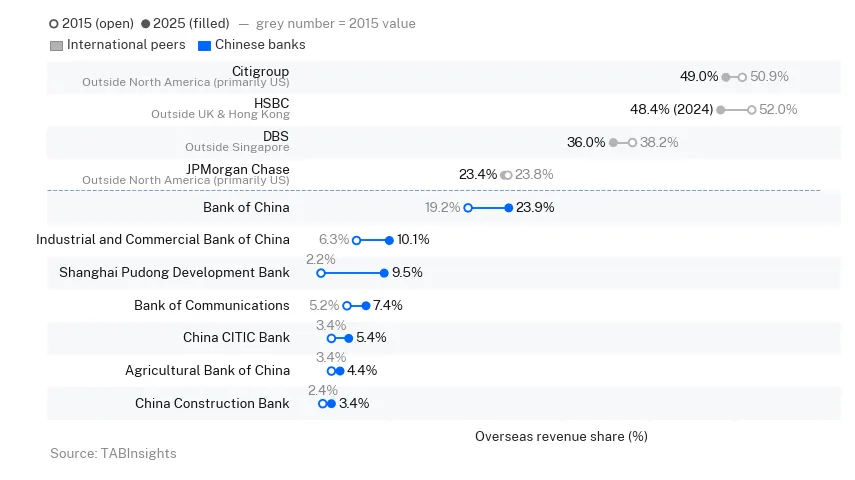
China's major banks are expanding overseas revenue, driven by outbound corporates, renminbi internationalisation and domestic margin pressure. Most earnings, however, remain concentrated in Greater China, highlighting a persistent gap with global peers.
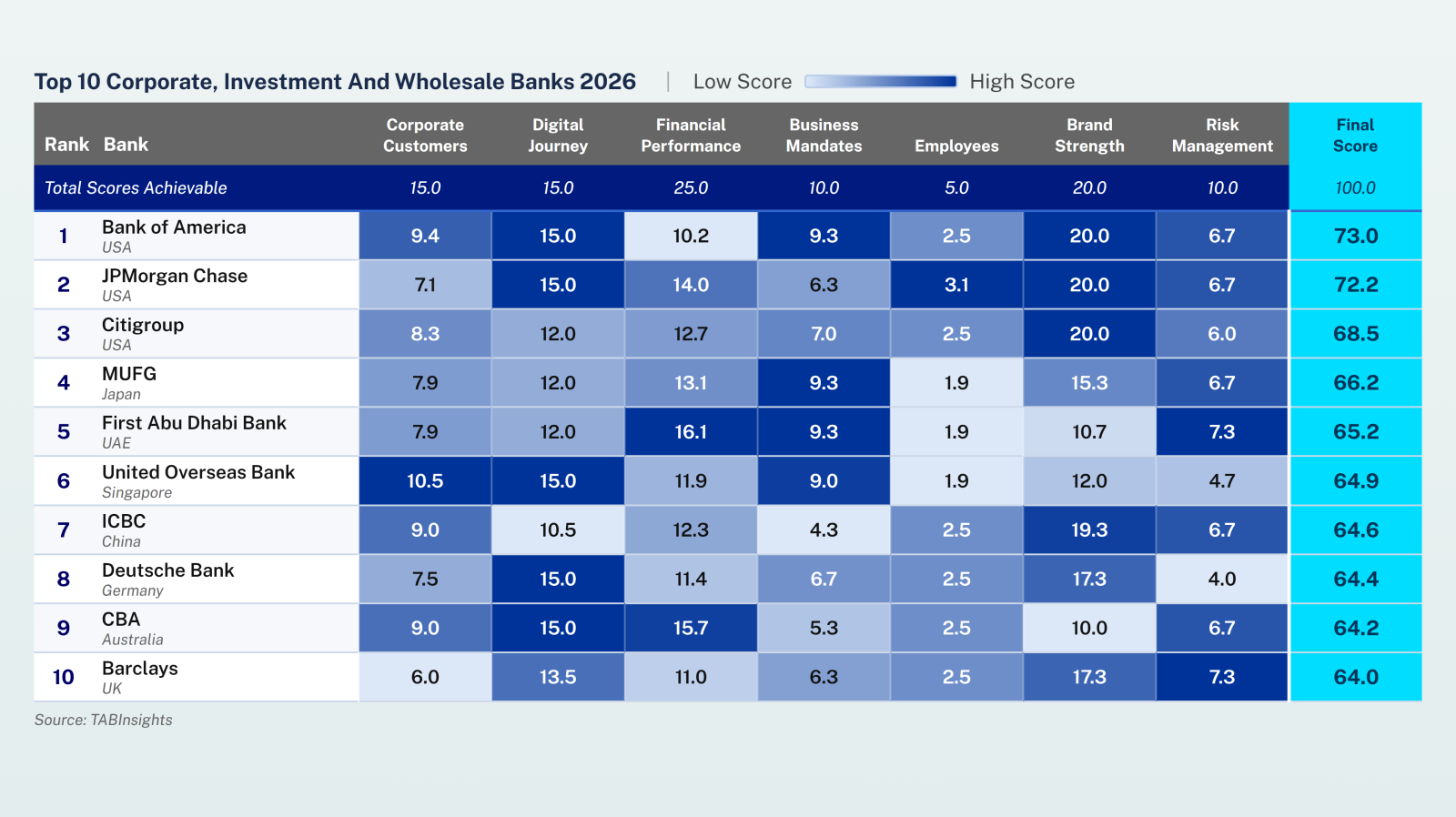
Global CIW banking has entered an execution phase, where rank movement is driven by improvement across multiple dimensions, while the efficiency gap between Middle Eastern and Western institutions widens