
Financial institutions are swiftly adopting blockchain and cryptocurrencies, catalysing regulatory discussions and heralding a significant shift in the global financial system.
Despite recent market volatility and real estate downturns that resulted in a wealth decline in 2023, China’s wealth management industry is poised for continuous growth in 2024 and projected to exceed $100 trillion by 2025
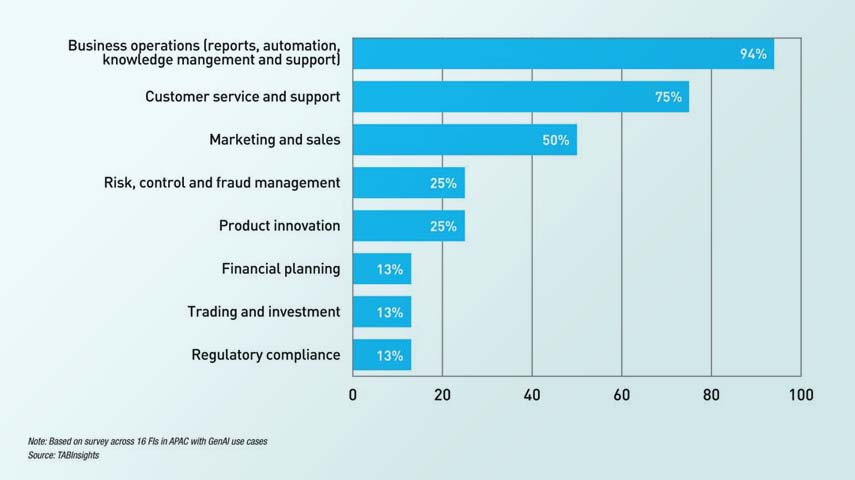
While leading financial institutions are rapidly integrating GenAI into operations to enhance efficiency, challenges in model reliability, data integrity, and compliance hinder implementation and scalability.
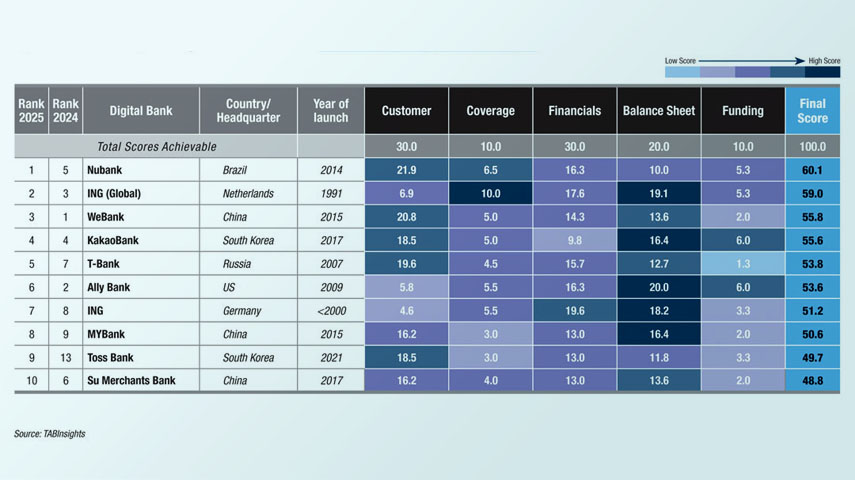
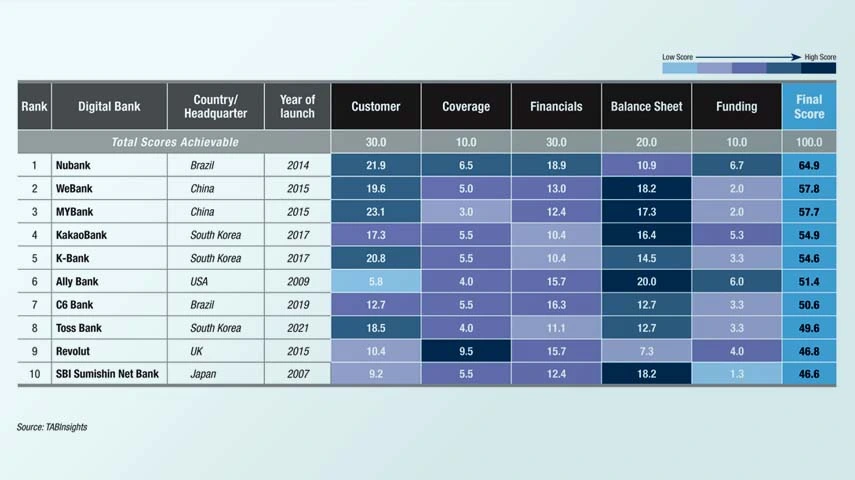
Digital banks continue to experience rapid growth in users, assets and revenue, with Brazil’s Nubank, the retail arm of ING Group and China’s WeBank leading the sector. Profitability among digital banks has improved, with a shorter time to break even.
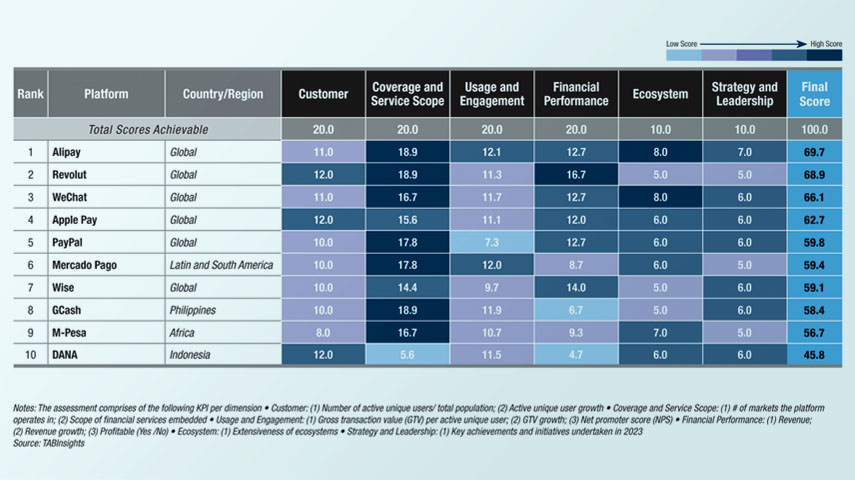
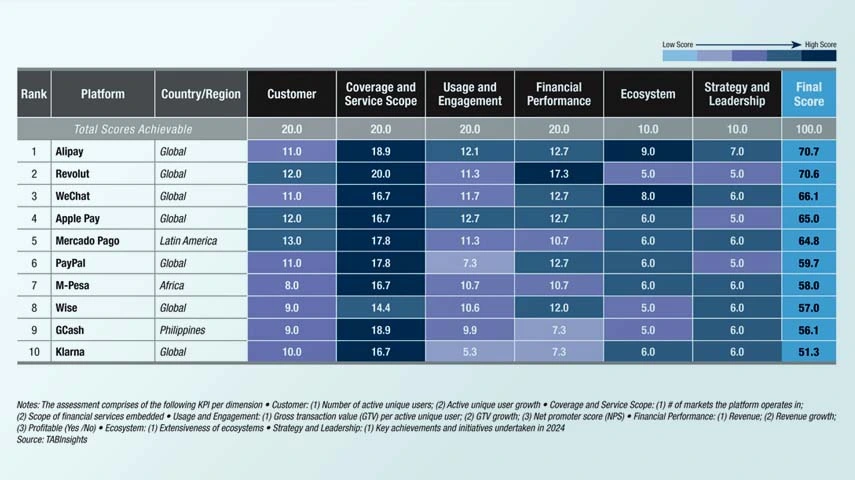
Asia is leading in financial platform development and adoption, with Alipay building a vast ecosystem and global reach, while Revolut excels in user acquisition and financial performance.
In Asia Pacific’s fragmented payments landscape, demand for faster and more transparent multi-currency payment solutions is rising as corporates expand businesses regionally. Banks are shifting from standardised offerings to integrated, AI-enabled solutions that balance security and compliance.

Alipay leads the 2026 TABInsights World’s Best Financial Platforms Ranking with scale and ecosystem depth, while Revolut shows expansion through customer and multi-service growth. Ecosystem integration, artificial intelligence, local adaptation and regulatory compliance underpin growth and competitive advantage.

Digital banks are moving toward more structured growth, with headline growth moderating but overall expansion remaining strong. Profitability has improved, while balance-sheet management, revenue diversification and operational efficiency have become defining priorities.