
Our archives on Russell Pereira

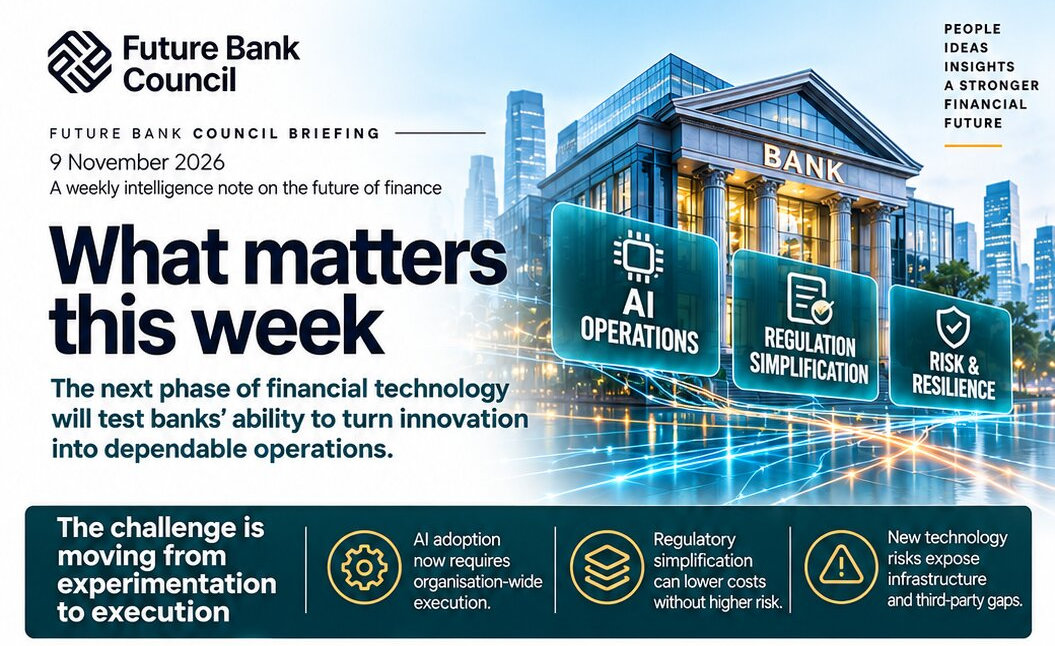
The next phase of financial technology will test banks' ability to turn innovation into dependable operations. We believe competitive advantage is shifting from institutions that experiment with new technologies to those capable of deploying them consistently across their businesses. Central banks are demonstrating how artificial intelligence can be integrated into daily operations, regulators are developing shared frameworks for adoption and new supervisory requirements are increasing the pressure on banks to modernise their operating models. What distinguishes these developments is their emphasis on execution. The challenge is no longer whether banks can access new technologies, but whether they can achieve commercial value while maintaining control over data, risk, accountability and customer relationships.


The banks that adopt new financial technology fastest will not necessarily control the markets it creates. We believe competitive advantage is shifting towards institutions that can provide trusted settlement, liquidity and accountability across emerging financial networks. Central banks are shaping access to digital money, regulators are testing the limits of tokenised assets and autonomous transactions are creating new questions about authority. These developments point towards a contest over who operates financial infrastructure, rather than who experiments with it.

The next phase of competition in banking will be shaped by who controls the infrastructure, not simply who adopts new technology fastest. We believe the latest regulatory developments show that artificial intelligence, digital money and shared financial networks are moving beyond experimentation into questions of institutional responsibility. Banks are gaining new ways to serve customers, but they are also becoming more dependent on technology and infrastructure they do not fully control. The strategic challenge is to innovate without losing command of the risks.

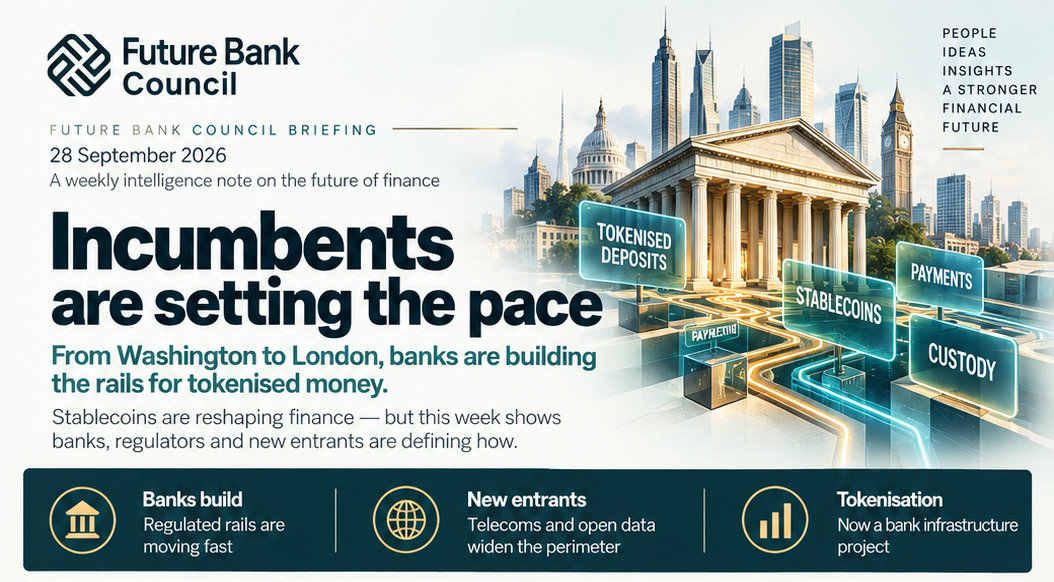
We think the past week undercuts the assumption that stablecoins are on an inevitable path to disintermediate banks. The Federal Reserve proposed bank-friendly stablecoin rules. Canada's Big Six banks agreed to build shared tokenised-deposit infrastructure together, and Deutsche Bank moved to custody the coins it once dismissed. Incumbents are racing to make regulated money the default rail. That perimeter is not closing everywhere, though. Bangladesh handed a telecoms group a full banking licence this week, and Kenya moved to force banks to open their customer data.

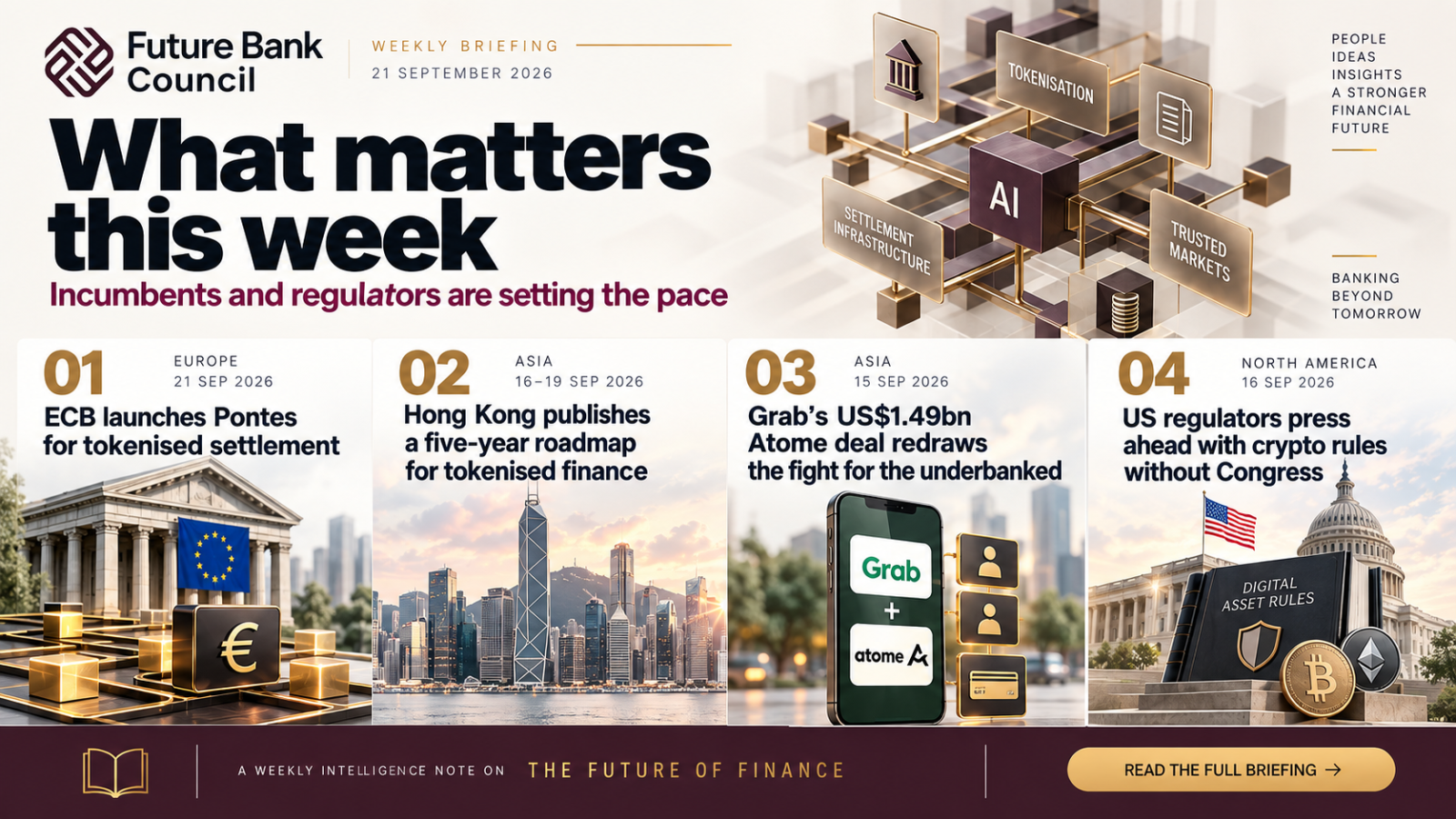
The institutions setting the terms for tokenised and artificial-intelligence-native finance this week were not the challengers. They were the incumbents and their regulators, each moving on a timetable of its own choosing rather than the market's. A central bank launched settlement infrastructure it built itself. Two American regulators said they would write crypto rules without Congress. A neobank opened a stablecoin-linked US account before its banking charter had cleared. None of this waited for consensus, and banks that are still waiting for one are already behind.

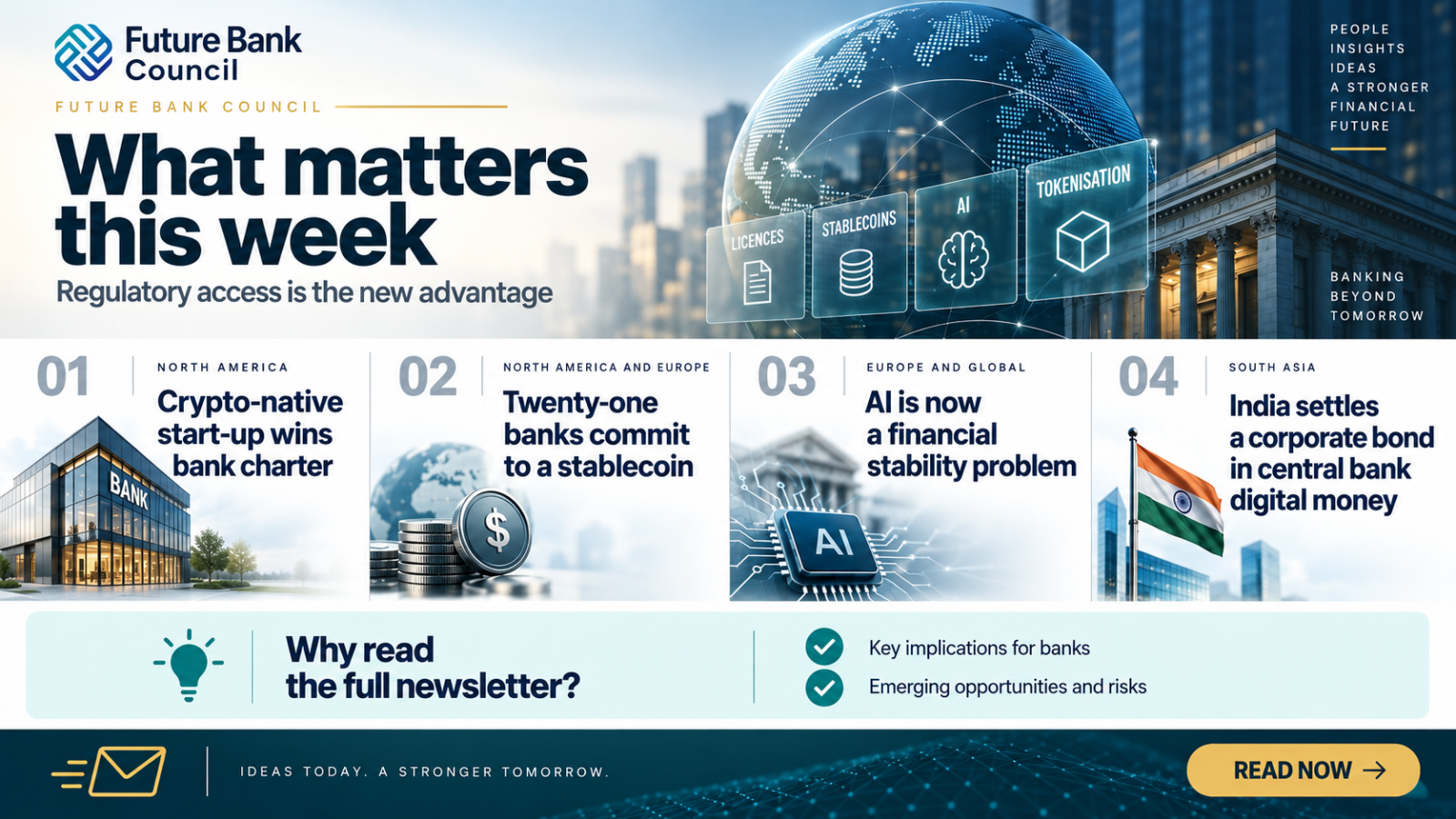
We think this week shows that banking's fastest-growing frontier is now regulatory access, not invention. Crypto-native start-ups and global consumer banks alike are being handed the same full charters, licences and central bank rails that incumbents spent a century building, while the underlying technology itself is not new. What has changed is that supervisors are now willing to stamp it, and banks that treated tokenisation and stablecoins as someone else's experiment are discovering the licensing queue has a limit.

Exclusive benefits are on your way. Subscribe and enjoy the benefits.